A project plan becomes useful when the team understands the work behind the client agreement. AdComPro helps agencies structure assignments into milestones and tasks, with estimates, status and pricing agreements. That gives project conversations a concrete starting point: the work you are actually delivering.
Start with the deliverables
“Create a campaign” is a brief, not yet a workable breakdown. Identify strategy, concept, production and evaluation. For each part, agree what the deliverable includes, who handles it and where client input is needed. Clear boundaries make additional requests easier to recognise.
AdComPro supports milestones and tasks, rearranging the structure and reusing project templates. Reuse the structure thoughtfully: a previous estimate may be a useful reference, but it is not automatically right for a new client or a different scope.
Connect progress with recorded time
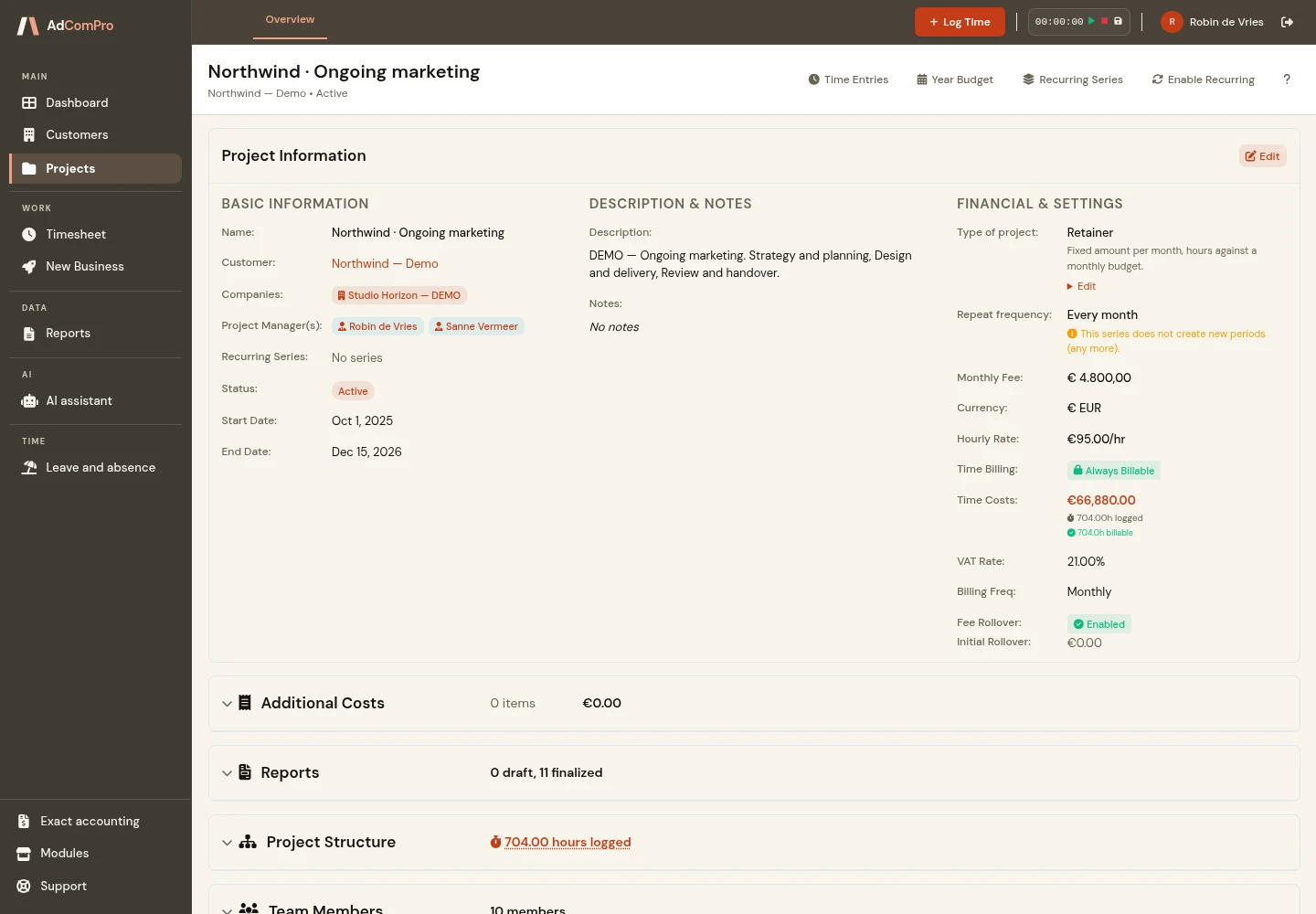
A task can look almost finished while already taking more time than expected. Review its status alongside recorded project hours, and ask how much effort remains. The combination is more informative than either a task list or a timesheet alone.
Team members record time against the project work. The approval step checks entries before invoicing. Approval of a time entry is not the same as the client agreeing to additional scope; handle that commercial decision separately.
Example: a 60-hour campaign
Illustrative example: estimate 12 hours for strategy, 18 for concept, 24 for production and 6 for evaluation. During the concept stage, the client asks for a separate approach for a second audience. Moving the delivery date alone does not explain the effect on the agreement.
Make the additional work visible and reassess the remaining effort. Discuss whether it fits the existing scope, replaces another deliverable or requires a separate agreement. Use project budget tracking to include the financial implications in that conversation.
Keep the pricing agreement connected
For work billed by the hour, time entries and rates support the invoice. For a fixed-price assignment, time still matters when reviewing delivery effort and the result for your agency. See how different hourly rates can apply within a project.
Before invoicing, distinguish completed work, checked time entries and agreed extras. Creating invoices from recorded hours keeps the administrative connection intact. For ongoing work, also consider whether a retainer with a period budget fits the relationship.
Evaluate the workflow with a real brief
Bring a familiar assignment to the demo. Create three milestones, add several tasks and check whether colleagues know where to record time. Then discuss a scope change: can you explain what it means for the work, effort and price? This gives you a more useful test than browsing an empty workspace.
This page covers structuring and following up client projects. If you need staff scheduling, dependencies or a specific Gantt view, ask to see those requirements demonstrated separately. Review the features and current plans alongside your test.
Does every small job need its own project?
Not necessarily. Choose a structure that reflects the client agreement and makes time entry unambiguous. Too little detail hides changes; too much detail adds recording effort. Start with recognisable deliverables and add detail only where it helps you make decisions.